Showing posts with label curriculum reviews. Show all posts

Thursday

{Review} Alpha-Phonics

Over the years I have tried quite a few products aimed at teaching your child how to read. From workbooks to computer games to hands-on learning products. I have made my own and I have used others. And when I look back over the years of teaching my kids how to read, I can see which products were used and forgotten and which were used over and over. And what I have learned, is that we prefer the simple and the plain when it comes to reading and phonics products. So when I was approached by the creators of Alpha-Phonics to try their product, I was ready to give it a try and see if it would work for my current struggling reader.


What is Alpha-Phonics?


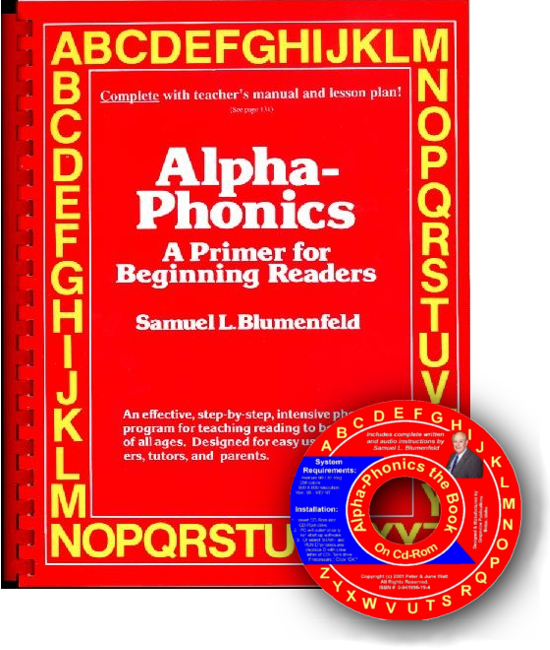
 On the front cover of the Alpha-Phonics books states this well. It describes Alpha-Phonics as:

"An effective, setp-by-step, intensive phonics program for teaching reading to beginners of all ages. Designed for easy use by teachers, tutors, and parents"

And that is exactly what it is. The Alpha-Phonics primer is one book, with no frills, no pictures, no characters and no color. It reminds me very much of the old 1900 primers I used to use with my older kids when they were learning to read. The book is all inclusive- with lessons, teachers manual and pre-reading exercises all included in the same book.

Alpha-Phonics also sells optional resources to go along with the Alpha-Phonics textbook. These include Alpha-Phonics & How To Tutor Phonics Workbook and the Alpha-Phonics & How To Tutor Little Companion Readers. These can be used in conjunction with the textbook to enhance learning and solidify skills.


How We Used Alpha-Phonics


I am currently working with my 6 1/2 year old on learning to read. He has a base knowledge but was having a hard time picking up speed and moving forward. We were given a copy of the Alpha-Phonics textbook, the optional workbook and the companion readers. We started Alpha-Phonics at the beginning but proceeded quickly through the early lessons,  sometimes doing a few per sitting since they were review for him.

The textbook is set up so that the child learns something new- a letter sound, a blend, etc and practices reading words using that new item. Then the following lesson focuses on practicing reading sentences containing the new and previously learned sounds.

At this time I chose not to use the supplemental workbook, but we did use the Little Companion Readers. My son is very stubborn, to the point where I often don't know what his actual reading level is because half the time he refuse to try just because he wants to. We worked through one, or 2 lessons, per day together. Each week I gave him one of the companion readers to read silently to himself. Each of the kids have a required 30-60 min block of silent reading per day. He was to read the book to himself each day, coming to me if he got stuck. At the end of the week, or when he was ready, he would then read the book aloud to me. Doing it this way took his attitude out of the equation and having him read the book multiple times meant that he had a chance to pick up speed in his reading. Often by the time he read aloud he could read it at a normal rate and even add in some inflections.


The Bottom Line


I really enjoyed the Alpha-Phonics program and it's simplicity. I think my son's reading has improved in the past months that we have used it. I use it in conjunction with his previous language workbooks and our own collection of early readers. 

What I liked most:
  • As I have said a few times, simple is so much better for me and this is as simple and no-frills as you can get. 
  • I like that it is for any age- even adults can learn to read with this program without fear that it is too "kiddie".
  • The price is very reasonable  for a curriculum that can be used on any age, over and over again. 
  • It works. My struggling reader picked up speed and confidence. He fought against it less and learned more.
What I struggled with.....well I am not sure I have anything I can list here. But if you enjoy a more flashy program or if you need a script of what to say, Alpha-Phonics probably isn't for you.  If your kids want and thrive on the busyness of a character-covered page, you probably should skip this one. But if you want a reasonably priced curriculum that will do what it promises, I don't think you will be disappointed with Alpha-Phonics.


For More Information:


If you head over to the Alpha-Phonics website you will find videos and talks from the creator as well as videos from parents using Alpha-Phonics. You will find links on how to purchase as well as information on the entire line of products. 

You can watch one of these videos below:


 If you give Alpha-Phonics a try, let me know if you like it as much as I did!

Tuesday

{Review} See the Light: Art Projects

I have always enjoyed art, I am not necessarily an artist, but you can find my doodles on almost any paper that crosses my path and pastels, crayons and markers have always been in my home. As a parent, I have always tried to include art in our day-to-day life. When my boys were all small, we had an "art corner" with free use of an easel and paints, craft supplies, drawing supplies and any other artsy material you can think of. As the kids grew older, and especially once we began homeschooling, I added more directed art projects into our days. While I am big supporter or allowing a child to express their own creativity, I see the use of a directed project of a predetermined subject to help learn certain skills and methods in art. So, while I normally create my own art lessons and reproduce projects I have found online, I was very interested in trying a more "professional" approach to art.


See the Light is a DVD based art curriculum for children ages 10 and up. There are a few different series available: Art Class, which teaches the basics of things like composition, shading, perspective and color and Art Projects, which covers history and technique of a particular artist as the students complete a project in the style of that artist. For the purpose of this review, I received a copy of one of the Art Projects lessons to try out with my kids.


About the Product:


Like I mentioned, the Art Projects series is made up of 9 DVDs, each covering a different artist, and will have the students complete a projects based on the style of that artist. We decided to try out the Sunflowers Project, in the style of Vincent Van Gogh. The DVD is set up with 4 lessons, each lasting about 25 minutes (running time). Each lesson combines elements of art history, art technique and other art education basics. Each lesson requires very basic supplies. For Sunflowers, all we needed was oil pastels, paper and a few towels. There was also a requirement of a bouquet of sunflowers, but since the ones in the garden were past bloom and I didn't want to purchase any, we went without and used pictures from online, and the lesson's bouquet as inspiration.


Our Experience:


We sat down as a group- five kids ranging in age from 2 to 12 and myself- with Rylan's laptop centered for us all to see. The first lesson was all about drawing the basic form and adding the first layer of color. The kids each chose how many sunflowers they wanted to include, as well as the shape of the vase. The lesson really encouraged the kids to do what they wanted, which I really appreciate- even though they were doing the same project they could add their own elements and personalization.


We found that even though the lessons were only 25 minutes long, we had to pause often to allow each of the kids to finish each step and this stretched our daily art lesson to well over an hour. Half-way through the second lesson we decided to split each lesson into 2 sessions, so that we didn't feel as rushed.


The kids were pretty unimpressed (with their art, not the lessons), after the first couple lessons. They didn't see how it was going to come together to look like the completed project shown in the lesson. But once the negative space was filled in they really started to like what they saw.


Each lesson is also filled with a lot of history about the artist. We learned a great deal about Van Gogh and his life. I think the kids were especially interested in the fact that he didn't consider himself an artist and was very insecure about his abilities. One of my children in particular feels that he is NOT an artist and CAN'T draw. But hearing that fact and looking at his finished project he felt much better about his abilities.


Above are our final projects. I was amazed at the difference between the first day and the last. They all really came together and even the parts that they struggled with came together. I can also see the light bulb moment for the kids where they see that that techniques like layering colors, adding shadows and adding highlights make a huge difference in the finished project. These are lessons that they can bring into their own art creations for years to come.


The Bottom Line:


As you can probably tell, we all really enjoyed this Art Projects lesson. I asked the kids when we were finished what they thought and they unanimously agreed that they enjoyed these lessons better than ones we've done in the past. My oldest liked that she did the project along with them so they could SEE what each step was and not just be told what to do.

What I liked most:
  • The lessons combine many visual elements- there is an artist's original print, a finished project, a vase of sunflowers, and the teacher completing a project along with you. All of these elements can really help the kids see what they are doing and what they are working toward. 
  • Although the lessons are for ages 10 and up, they are fully customizable to all ages. We tend to do electives such as art as a family, so this is a big plus!
  • I like that the lesson include art history, while we have completed many projects and worked with a variety of mediums over the years, I have never done much on the history part of art even though I think it is very important. 
  • With high school on my mind, I like that this series can be used to satisfy the fine arts credit. You can even find a PDF download on how to use See the Light to satisfy a 1/2 or full credit for high school on their website.
Notes:
   The See the Light lessons are Christian based and do include elements of such. We are secular homeschoolers and although the religion-based parts of these lessons were not 100% in line with our beliefs, I would still recommend this product for its intended purpose of art history and instruction.

Product Facts:

For more information about See the Light, or to purchase the lessons for yourself, you can visit their website- where you will find all the information you need plus tips, sample lessons and a blog.

The Art Projects DVDs can be purchased individually for $14.99, or as a boxed set for $99. You can also join a DVD of the Month Club for $12.99 per month.

Also available are the Art Class series, the art-based Bible Stories series and the Art Projects Cartooning DVD.

To read more review of this product or other projects in this series, visit Mosaic Reviews.


Monday

{Review} Math Mammoth

Choosing a curriculum is a daunting task. Over the years I have found myself pouring over the phone book sized Rainbow Resource catalog attempting to make choices that will provide my children with the best education that fits their learning style. Math is a very personal subject- we all think in different ways and see things with different eyes. Personally, I love math. Some love to correct grammar, I love equations. It comes rather easy to me, but teaching math does not. Over the years we have tried various math curricula to see what works best for me as the teacher and the kids as the students. We've been all over the place, and while we have settled on favorites, those favorites do have some places that I feel are lacking.


One of my older boys' current math curriculum lacks the repetition and time needed to really solidify the multiplication and division facts. My 2 younger sons use a curriculum that is very heavy on the mastery of the basic math subjects, but don't offer a lot of "extras" like time, money or measurement. So when I was given the opportunity to review Math Mammoth, I decided to choose their Blue Series, which is a series of worktexts that cover specific topics meant to be used as a supplement, extra practice or just as review.

Math Mammoth's Blue Series is inexpensively priced and available for PDF download, with a print or CD option also available. The worktexts cover most topics up to grade 6, with some grade 7 topics as well.


I choose 4 books based on areas I thought my boys needed the most work: Clock, US Money, Multiplication and Division 3 and Fractions 2.

My 3rd and 1st graders used the Money and Clock books, while my 5th grader used the Multiplication and Division and Fractions books. We used them in addition to their current math curriculum to touch on topics not covered and for add practice on topics that were proving more difficult to master.

What did we think?

Over all Math Mammoth has a lot of positives.
  • The Worktexts are in inclusive. They serve as the text books, work book and answer key all in one. 
  • I like that there is a PDF option. Not only does this offer a less expensive option (only $2-$7 per e-book), but for those with multiple children, it saves time and money.
  • The individual books are intensive enough to provide topic mastery by the completion of the book.
  • Math Mammoth gives you all sorts of options from the Light Blue Series which is a full curriculum to a mix and match curriculum using the Blue Series or as a supplement curriculum. There is something for everyone. 
  • Math Mammoth is self-teaching, with very little prep work for the parent/teacher.


What didn't work for us:
  • Switching curriculum is hard, and while I do think it is important to learn how to do math, no matter how it is presented, my older son didn't care for how the multiplication was presented. (That being said, his multiplication did improve.)
  • I personally didn't like how the clock book was presented. I can see how young children, with no prior experience telling time, might be okay with starting with a one handed clock. I found it unusual and confusing.
 If you aren't sure if Math Mammoth would be a good fit for your family, the creator offers a "virtual tour" by email which included over 300 worksheets and sample pages from the various books. The Blue Series e-books are also inexpensive enough to try one to see if it works well for you child.

If you are interested in purchasing Math Mammoth, you can find them at CurrClick, Kagi and LuLu.


Head over to Mosaic Reviews if you would like to read more reviews and see what others thought about Math Mammoth

Saturday

{Review} EEME Project Genius Light


There are a few skills that I think are truly important to learn in this day and age, and one of those is electronics. We live in a technological age, which makes it very important that we understand the inner-workings of the machines around us. Enter EEME.


 EEME's monthly hands-on project kits teach kids about electronics. Each project kit is paired with online curricula to not only guide the kids in assembling the project but also to teach the concepts applied. EEME's kits are aimed for kids ages 7-12, but older and younger kids can definitely learn from them too! The first kit in the subscription is Project Genius Light- which will get your kids learning all about circuits, resistors, LEDs and other basic electronics knowledge.

About the Kit:

 From EEME: 


              "With the Genius Light project, you will assemble a simple LED circuit system that does the smart thing - lights up when it is dark and dims when it is light. The project kit will be shipped with all the materials needed to build the Genius Light (a breadboard, resistors, circuits, LEDs, battery). Once you've gotten your kit, you'll come back to eeme.co to access our 45 minutes of online videos, which will (1) teach you and your kid how to build the Genius Light, and (2) explain the electrical engineering concepts behind it. (Videos are free to check out.)"


So what is in your first EEME monthly project kit? 


The only thing you will need in addition to your kit is access to a internet-ready computer. The kits go hand in hand with online curricula that will teach your kids not only HOW to complete the project but the WHY behind it as well.
 

How does it work?

You will start by accessing the video lessons from EEME's website. These lessons are broken down into many short videos that will step by step lead your children through the process. I was a little worried that 4 pairs of hands working on one project would lead to frustration, but there are so many little steps that everyone got plenty of chances to help build the project. Depending on the age of your child you may need to offer a hand, so stick around and use this time to learn together. I found that my 12 year old needed no help, while my 7 year old had a hard time with some of the assembly. The videos will also tell you when your assistance may be needed.


One of the best things about the video lessons is that they aren't simply how-to instructions. The kids have to build, take apart, and re-build numerous times before actually starting the final step of building the genius light. This means there was plenty of time for things to go wrong- which is a good thing! My boys learned how to troubleshoot and double check their wires and circuits in order to make it work before moving on.


The lessons not only gave directions on how to set up the circuits, but also the reasons behind what they were doing. So they learned what a resistor was and its purpose and got to experiment with how the light looked with and without the resistors in their circuit.


Also included were short assessment questions at the end of some of the videos to check and make sure the kids were actually understanding what they were hearing.


What we liked best:


  • The video lessons were amazing. I loved that the lessons were broken up into shorter sections as opposed to one long video. Having someone who truly understands what they are talking about and teaching is so much more effective than me reading a manual and trying to teach the same thing. 
  • One kit can work over multiple kids of multiple ages. The kit can be assembled and disassembled numerous times. You don' t have to have one kit per kid. They can work together or on their own one at a time.
  • I liked that they were actually learning concepts. We've had many "eclectronic kits" over the years and they show you how to complete a circuit but not why.
  • I like that each new project builds upon knowledge learned in the previous project, it's a great way to really solidify the concepts being learned.


How can you get your own?


EEME has 2 pricing plans, starting at $18.95 per month. Each month you will reuse your breadbox and battery pack, but will receive new project parts in the mail that will build upon the knowledge learned in previous projects.

And if you act fast, you will receive the first month free when you subscribe to EEME! That means you will get to try out Project Genius Light at no charge! Just click here and you will see a special promo banner on the bottom of the page! This promotion will expire on 9/16.

You can also find EEME on Facebook and Twitter!

 Click here to read more about EEME and what other families thought about the project.

Wednesday

{Review} LeapFrog Paper Based Learning Products


I am sure most parents out there are familiar with the LeapFrog Brand. Over the years we have owned many of their electronic learning toys, but now LeapFrog, by MEGA Brands, is publishing a line of paper based learning products to help kids develop important school skills such as handwriting, counting and math.


We received a few different products- targeted for the K-1st grade range- for the purpose of this review. When I think of the LeapFrog brand I think of well made, bright and educational products, and these did not disappoint. We received a few different flipbooks covering printing, numbers and math topics. The products are made to last- made from heavy board and an easy-erase surface for using over and over again. My kids have always loved doing dot-to-dot puzzles so, of course, Lakin was happy that each page of the printing book had a dot-to-dot. I am sure he didn't realize that with each puzzle he completed he was solidifying his knowledge of alphabetical order!

Also included in our package was a Ready for 1st Grade Math book and Subtraction Flash Cards. The subtraction cards are double sided and also include counting units (and units marked with an X  for 'taking away')  pictured beside each fact to help with learning the relationship between the quantity and the numeral. The Ready for 1st Grade Math workbook covered a large variety of topics like number order and words, skip counting, patterns and simple addition and subtraction. Lakin has already mastered most of the concepts in the workbook, so it won't get too much use just yet.

What Did We Think?


As I have mentioned before, when it comes to the early years when kids are building a strong foundation in the basics, I will take all the help I can get! If there's a product out there that will make reading more fun, writing more interesting and math less of a chore, I am all for it!

What we liked best:

  • I like the dry-erase aspect. For me, I like that I can reuse the product over and over, for multiple kids. 
  • Lakin (and Annika too!) likes the dry-erase aspect. For kids, a product needs a point of interest. Something about using a special pen and eraser can make all the difference when it comes to writing practice!
  • I like the durability. I have used a number of products over the years and I appreciate the strong cardboard used and the ease of use of the flip book design. Design is important when we are talking about an easily frustrated 6 year-old!


Where to Buy:


 LeapFrog products by MEGA Brands are available for purchase (MSRP $0.99 - $24.99 for children ages 3 and up) at major retailers including Toys R Us, Michaels, Joann’s, Target, Walmart, Officemax, and Costco. At Target and Walmart, look for them near the stationery and writing instruments, rather than toys or school supplies.

You can also check the Back-to-School section at these retailers to find these products!


Thursday

{Review} Classical Historian Go Fish Game


I am always looking for ways to get more "play" into our school day, so we were all excited to try The Classical Historian's Go Fish Game to see it if it lived up to our expectations.

About the Game:


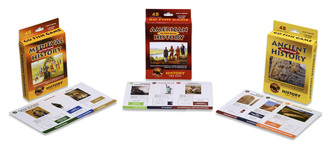
The Go Fish Game is a card game containing 50 cards depicting historical images in 12 different categories. Each set can be used to play 4 different games. The suggested ages are 5 and older (reading necessary)

  1.  Go Fish: This is the standard Go Fish we all grew up playing with a historical twist. Players must collect all 4 cards in each category before laying down their match.
  2. Collect the Cards: Players are read historical fact hints and try and guess which image is on the card.
  3. Chronology: Assemble the cards in chronological order in the fastest time!
  4. Geography: Players try to assemble all the cards under the correct continent in the fastest time.


What did we think?


We recieved the Ancient History version the the Go Fish Game. Cale and Cohen were excited to get started as soon as it arrived! The cards were well made, durable and nicely illustrated. They even stood up to my bunch who all seem to bend cards while playing games like these.


 What we liked best:

  • Go Fish is not my favorite game. Actually, my kids ask to play all the time and I usually suggest another game. To me it's always been sort of a pointless game, but I really enjoyed playing this with the kids. The historical facts gave a point to the game and added educational value. If you are going to play Go Fish go for one like this!
  • I liked that there were multiple games to be played with the deck. My oldest is too "old" for games like go fish, but does like trivia games so the Collect the Cards Game was right up his alley. Where as Go Fish suits the middle boys just fine.
  • The game does not overpower with factual information, but in the course of playing you learn historical association and facts. It is a gateway to finding more information. And questions like What is Stonehenge? or Who is Socrates? were heard often. 

What we had trouble with:


Over all we loved this game! And the kids have asked to play at least twice a week. The only thing  I had a little bit of a problem with was the hints given in the Collect the Cards version of the game were very vague and often only one or two words. The game has an opportunity to really teach what each of the images are about, if they only added a little more information to these hints.

Where to Buy:

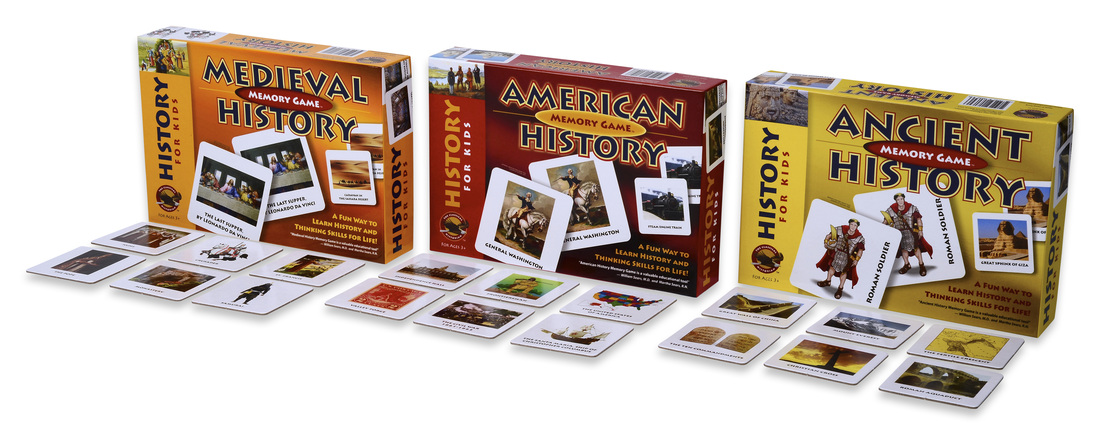
 The Classical Historian offers 3 versions of the Go Fish Game: Ancient History, Medieval History and American History. They can be purchased for $11.95 each or $29.95 for all 3.


They also have a Memory Game version of the same 3 time periods which can be purchased for  $14.95 each or $39.95 for all 3. I think this looks perfect for the younger, non-reading set as well as the older kids.


The Classical Historian also offers a variety of complete history curriculum for grades 6 and up. See their website for full information.


Wednesday

{Review} My Home School Grades


At this point in our homeschooling journey, I don't really give that many grades. Actually the only thing that we grade is math and that is mostly because Teaching Textbooks does that for me. But I have never actually averaged all those lessons and tests up into a final grade. Nevertheless, when I was given the chance to try out My Home School Grades all it took was one look at their website for me to be excited to try it out. 

About the Product:


My Home School Grades is a very simple web application (accessible on your computer, smartphone or tablet). It's a way to keep track of your children's classes, grades and activities and in the end produce a very simple, professional transcript of their education. You can find all sorts of how-to videos on their website to get you started, but really they aren't needed since everything is laid out and very easy to navigate. 


You start by entering your student(s). Then you can add all of their classes. You can enter the class name, grade level, how many credits, if it's an AP/Honors course, if it's a Pass/Fail course, school year, subject, etc. My Home School Grades also made it very easy by providing some of the most common curricula for you, and if you are more of an unschooler or use a different curricula you can use the other/custom listing. 
Once you've added a class you can start adding grades. Simply type in the lessons, test, quizzes and the grade. You have option of grading by letter, fraction or by number. Based on your account settings final grades will automatically be shown as Percent number, Letter, or Letter +/-. Some of the curriculum choices have their lessons already names and listed so that all you have to do is enter in the grade. You also have the option of entering just a final grade, as well as entering the grades for those classes earned through dual enrollment.


All of the calculating has been done for you. You can also weight the lessons, quizzes, tests and labs differently in order to calculate the final grade in a way you want. I also wanted to point out the flexibility here- even if you are an unschooler or don't use a lot of pre-made curricula, your child will still need some sort of high school transcript in order to graduate. You can uses these 4 categories- lessons, quizzes, tests and labs- as any thing you want. To you they can mean anything you deem an important part of their learning process and gauge of their comprehension.


You can also add all of your child's extracurricular activities and achievements. You can choose for a pre-populated list that includes categories such as work, community service, Scouts, 4-H, school, church, etc. You can add a name and description to the activity as well as listing any awards and references to go with it.


The second part of My Home School Grades is the transcript. They take all of the information you enter over the years and create a very nice looking transcript listed by grade level. You can choose to start the transcript at any level or just include the High School years. You can export multiple transcripts so you can include a comprehensive, all grades one for your files and a more official high-school only one for graduation and college applications. Also included on the transcript are the calculated GPA, points and credits for each year as well as at graduation.

My Thoughts on this Application:

Honestly, I loved it. It was easy to set up, easy to navigate, and easy to use. Some of the things I liked most:
  • The fact that all the calculations are done for you. No matter how you enter the grades- fraction, percent, letter- in the end the grades are listed uniformly how you want them.
  • The customer service is wonderful! Any problems, questions, suggestions, etc you have I have no doubt the creators of this program will do what they can to help. They truly want this to be accessible and useable for all homeschoolers.
  • I loved the transcripts. It's part of who I am, but I have always loved the look of lists like these and I think their transcripts are done simply and beautifully with all the right information included. There is also just enough flexibility so that you can choose certain elements to include or leave out.
The only bad thing to come out of using this program is that now high school is very much on my mind. But I guess seeing as that next year is the last year before we move into high school I guess I should be starting to think about it a little more!

How to get it for yourself:


My Home School Grades is very affordably priced at $49.99 for a yearly membership! You can also pay monthly at a rate of $5.99/month. These rates include any future upgrades and additions to the application as well as unlimited students and free support. They offer a 30 day money-back guarantee, so you can see for yourself how great this application is and how it will work for your family!

**UPDATE: My Home School Grades  has made LOTS of changes and added many, many features since this review was written. My oldest is in high school now and this program has been so valuable in planning his high school classes, activities and keeping track of grades! **


Friday

{Review} Come on an Ooka Island Adventure!


Reading. It's one of the most important skills anyone can have. It's also one of the most stressful parts of homeschooling. I have successfully taught 3 of my 5 kids to read. I was not blessed with self-starters or motivated readers. None of my 3 oldest taught themselves, none of them zipped through words quickly and effortlessly, and none read for pleasure for a long time. You would think that having done it 3 times before, teaching #4 would be a breeze. But like with most things, my kids are all very different and what works for one definitely doesn't work for the next. Lakin and I are in a frustrating place right now in his reading journey. He's stubborn, a perfectionist, and doesn't have a huge attention span. We are making slow but steady progress, and I will take any help I can get when it comes to teaching how to read. I am a firm believer that practice makes perfect, so the more words, books, games that have to do with language the better.

Over the years I have used many different computer programs aimed at teaching phonics and language skills. I have used CD based programs, free website, subscription based websites and free trials of many more. So when I was asked to try out Ooka Island I was pretty excited. Like I said- I will take any help I can get in hopes that it will help make reading click!


About the Product:

Ooka Island is learn to read game designed for kids at the Pre-K to 2nd Grade level. It teaches phonics, phonemic awareness, vocabulary, fluency, comprehension. It is a self contained application on your computer, available for both Mac and PC, that adapts to your child based on their abilities as they go through the program.


Ooka Island follows a cycle of guided play, e-reader and free play to help keep the kids engaged and eager to learn. The Ooka Island map is full of fun and games such as Alphabet Mountain, The Cake Factory and Bubbly Trubbly that teach things phonics, blending, decoding and sequencing. The player moves through these games during the guided part of each lesson. Then they enter the Popcorn Library to read and earn books. In this e-reader section they listen to a book and complete comprehension activities. You can even print out a book path for them to place stickers on as they complete each book.


In addition to the application, there is a online component to the game where parents can go to see their child's progress. You can view all sorts of reports and analysis and see how your child is progressing. You can also find resources to use offline such as workbooks, book paths, certificates and even music to help keep your child excited!

What did we think?


Lakin LOVES games like this, and he was so excited when it came in the mail. It is very visually appealing which means kids are excited right off the bat.

What I liked most:
  • I like that is it self adapting. We have used programs in the past that don't adapt as the child progresses and this leads to boredom or frustration as things become too easy or too hard. 
  • This program does a really good job of keeping interest alive. The games change with enough frequency and they have enough movement and story lines involved to keep you thinking. 
  • Extra resources. Games like this are only part of teaching your child to read. It's still very hands on with parental involvement required. The activity books are great reinforcement for what they are learning in the game and the other resources work to keep the excitement alive. 
  • I liked that it had a lot of directed activities. This meant that Lakin couldn't keep repeating his favorite games  and he couldn't skip those he didn't particularly like. 


Things to think about:

We've tried quite a few computer based games in our reading journey, and what I have learned is that they all have good qualities and they all share a common goal. The biggest variable in the equation is your child. Different kids prefer different games, so I have always been a fan of the "free trial" offered by many companies. This way I can know for sure if my child is going to mesh well with the game. Being a self contained application, this might be hard to do, but I think some sort of Demo CD or online sample games might be a good idea so that customers, and their kids, can get a good feel for the game before making their purchase.  That being said, my child really enjoyed his time on Ooka Island, and I can see that his skills improved because of it.

Want to purchase Ooka Island for yourself?


Ooka Island can be purchased from their website for the following prices:

Individual:
 
    $12.95 per month or $124.95 annually

Family (of up to 4 children):

   $19.95 per month or $149.95 annually


 And right now you can get up to 30% off your subscription by clicking here!